

Our live album “Skjeringspunkt” (Intersection) is now officially available on CD & digital at
https://panzerpappa.bandcamp.com
Enjoy this short documentary about the concert, in beautiful Lofthus, Hardanger on May 13th 2024.

Our live album “Skjeringspunkt” (Intersection) is now officially available on CD & digital at
https://panzerpappa.bandcamp.com
Enjoy this short documentary about the concert, in beautiful Lofthus, Hardanger on May 13th 2024.

ABOUT THE ALBUM – “SKJERINGSPUNKT”
What would you get if you pair playful and melodic avant-rock with lyrical folk music? Panzerpappa, a Norwegian instrumental prog rock band, wanted to find out.
In May 2023, they teamed up with Rannveig Djønne, one of Norway’s leading artists on the diatonic accordion, to create an evening of rare musical encounters at the heart of Norwegian fjord country.
With the guest appearance of Silje Hveem Lofthus, a classically trained flutist, and Ola Mile Bruland and Veronika Hørven Jensen, two members of Panzerpappa side-project Mythopoeic Mind, the resulting concert met its purpose; becoming a musical intersection where ideals from different musical genres could find resonance (hence the name of the project, Skjeringspunkt, which in Norwegian means ‘intersection’).
Despite minimal rehearsal time together, the musicians managed to find common ground across musical barriers to create something new and unique. The concert was documented, with both multi-track audio and multi-camera video recordings, and will be available in digital formats from Panzerpappa’s Bandcamp site.
The audio recording will also be available on CD in a limited number of copies and can be ordered from the same site. The album, with release date set to March 1st, 2024 is dedicated to the memory of Lars Hollmer. The album will only be available as a physical CD and/or download from Bandcamp: panzerpappa.bandcamp.com

On the 5th of February 1978, Robert Fripp made the first solo performance of what would later be known as Frippertronics at the Kitchen (hence the exercise name Gastronomical), one of New York’s leading avant-garde art scenes.
He used a technique developed by Terry Riley and Pauline Oliveros in the ‘60 where two reel-to-reel tape recorders were set up so that the sound was recorded on the first tape machine and then played back a short time later by the second machine, the length of the tape connecting the two machines determines the length of the delay. He then played along with the delayed sound, layering new parts over the loops in real-time creating a complex, evolving soundscape.
This exercise was released on the 5th of February 2024, 46 years later, as a tribute to his significant contribution to the world of music.
https://panzerpappa.bandcamp.com/album/stil-vingar-exercises-in-style
Early bird price for a limited time : 19 Euros.
Regular Price 33 Euros.
Progress: 25 of 99 finished.
https://panzerpappa.com/
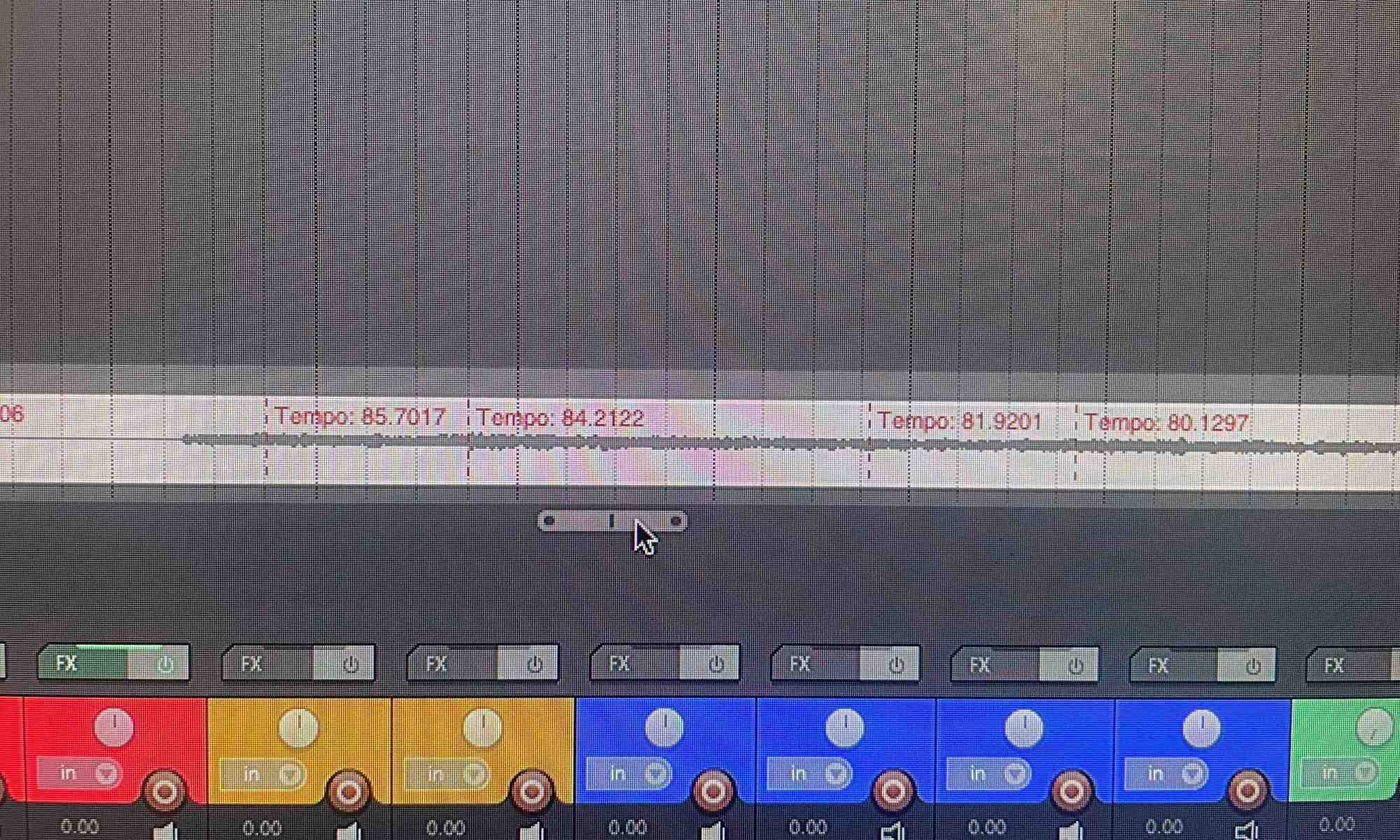
Listening back to all recorded tracks for “Landsbysladder 2” (Village Gossip, Pt. 2), destined for release on our upcoming studio album Landsbysladder (Village Gossip) in the fall of 2024. Trond apologizes for recording an abundance of extra percussion, Steinar comments on the unplayability of the vibraphone part, and Torgeir hears a phantom flute pop out of a dense mix…

It didn’t take Steinar long before he decided on a creative direction when Exercise no. 71 landed in his lap. Steinar went straight for the saxophone quartet as the choice of instrumentation.
As a linguistic term, the title is borrowed from an old Ancient Greek term meaning ‘the addition of a sound or syllable at the beginning of a word’. Not only is the saxophone, like many woodwind instruments, very well suited for adding grace notes and other ornaments to a melody line. It is also the instrument most familiar to Steinar. With a side glance at the other meaning of the title, that of a device designed to replace or improve a body part, you could say that the saxophone has been the prosthesis (or more commonly prothesis) of Steinar’s since childhood.
The musical piece that makes up Exercise in Style No. 71 is inspired by impressionist composers like Debussy, Ravel, and Mussorgsky. Towards the end, jazz influences become stronger and the recorded version is in this section enhanced by a moderate use of sound effects and percussive sounds created by processed sounds of closing and opening saxophone keys.
The four voices of the saxophone quartet, soprano, alto, tenor, and baritone, are all recorded by Steinar.

On July 2nd, 2021 Panzerpappa released the first part of an ambitious project, Stiløvingar (Norwegian for “Exercises in Style”), based on and inspired by Raymond Queneau’s book «Exercises de Style» from 1947.
The book retells the same story 99 times, every time in a different style. Accordingly, Panzerpappa decided to compose 99 variations on the same musical theme.
Taking inspiration from Queneau, all variations differ in style and genre, utilizing widely different instrumentations.
Panzerpappa will present the original theme in styles such as french café-music, disco, funk, soul, hip-hop, bluegrass, blues, Dixieland, electro-pop, avant rock, thrash metal, Bach fugue, Palestrina motet, brass fanfare, 12-tone music, mini symphony, march, and big band á la Mingus, and there will be variations inspired by artists such as Can, This Heat, Charles Mingus, Henry Cow, Ennio Morricone, Iannis Xenakis, and Magma, to name but a few.
“Exercises in Style” is a work in progress, and “Exercises on Stream” is a collection of some of the exercises so far.
All the exercises will be digitally released on Bandcamp as individual tracks, one by one, only to compile them into an album at the end. If you buy the album now you will be informed when new tracks are added to the album as long as you follow Panzerpappa on Bandcamp.
You find all the exercises at Bandcamp:
https://panzerpappa.bandcamp.com/album/stil-vingar-exercises-in-style
Written, recorded and mixed by Panzerpappa between 2021 and 2023
Mastered by Trond Gjellum, February 2023
Produced by Panzerpappa
Cover by Anders K. Krabberød
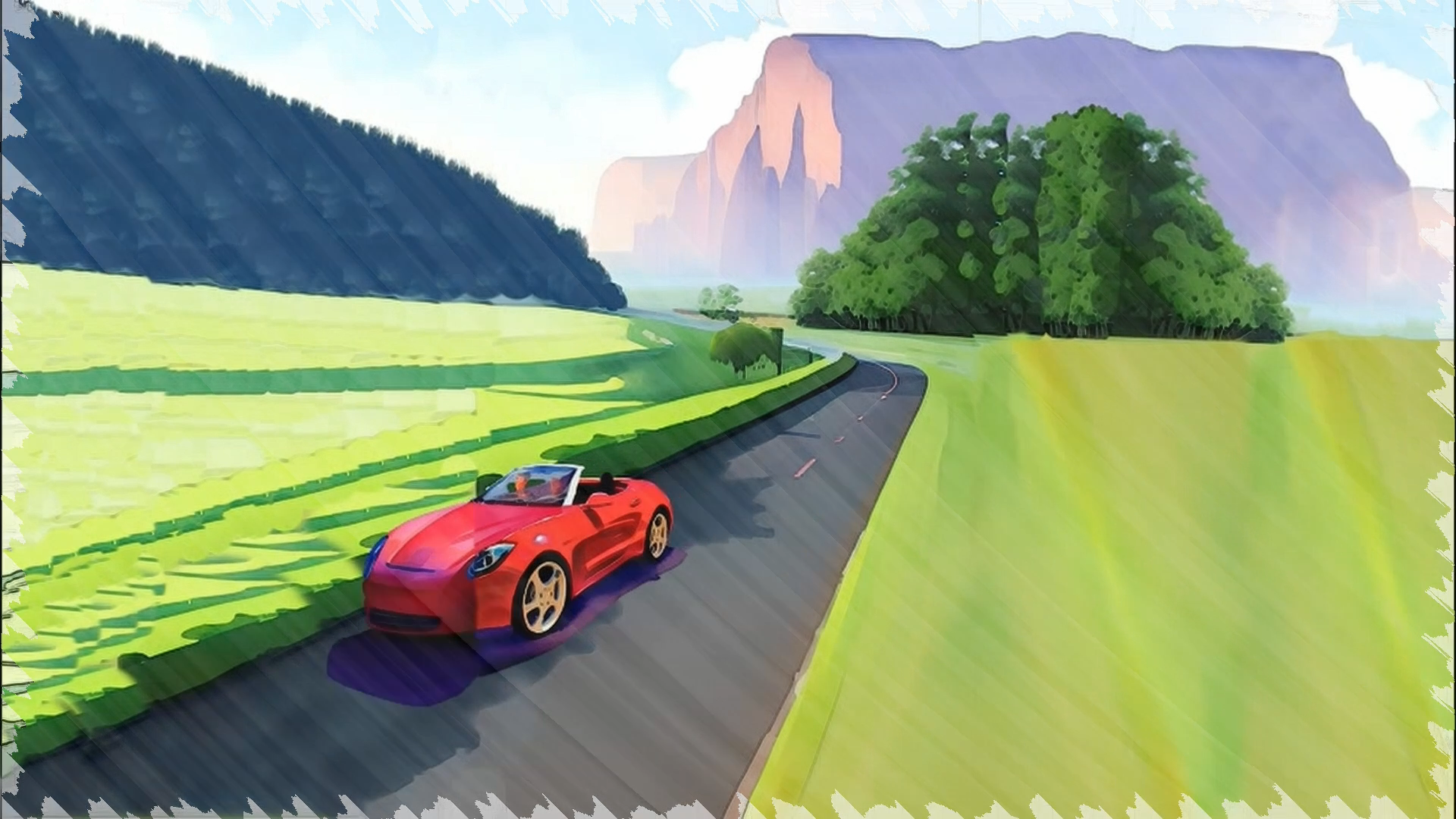
The next chapter in our Exercises in Style-saga has been uploaded to Bandcamp. This time it is variation #29 Perfektum (Present Perfect). A new animated video (far from perfect, we admit 😊) has been put together for the occasion. Enjoy!
In Panzerpappa, we continue our quest to musically interpret the 99 small texts which constitute the extraordinary literary work Exercises in Style by Raymond Queneau. This is the 23rd variation, or exercise, to be released.
This time, Steinar has tackled exercise No. 29, which in Norwegian is entitled Perfektum. Directly translated, this would be Present Perfect in English (the title of exercise No. 29 in the official English translation is Past).
With the title in mind, Steinar started pondering on the concept of perfection. On the one hand, objective perfection is only a theoretical ideal in this imperfect world of ours. But on the other hand, a subjective, perhaps even naive, sense of perfection might be experienced in brief moments when you feel that everything is «perfect». It might be a starlight night sky, a dead quiet sea surface on a summer’s day, or perhaps the tiny hand of a sleeping infant. Or just the feeling of wind rushing through your hair as you hurl down the highway in a signal red cabriolet?
In all its imperfections, here is Panzerpappa’s interpretation of Exercises in Styles No. 29: Present Perfect.
###
Stiløvingar [Exercises in Style] album is a work in progress and will continue to grow as we compose and record tracks. If you buy the album now you will be informed when new tracks are added to the album as long as you follow us on Bandcamp. We will add a handful of new tracks every now and then. By 2025 the album will contain 99 tracks, one for each of the exercises in the book Exercises in Style (1947) by Raymond Queneau. In other words, the price you pay is for the full digital album with all 99 tracks.
https://panzerpappa.bandcamp.com/album/stil-vingar-exercises-in-style
Early bird price for a limited time only: 19 Euros.
Regular Price 33 Euros.
Progress: 23 of 99 finished.
It all started with a paper cup…
Anders received a video from his niece, with her performing a «cup-clap»-rhythm. She asked if he could set some music to this rhythm, making it a proper, albeit brief, tune.
He did, with some programmed drums, funky bass, a wah-wah riff and a guitar/synth theme reminiscent of the opening to a TV series. Anders sent it over to his niece, and forgot about it for a while…
… until one day when we were discussing ideas for new Exercises in Style. He suddenly remembered the CupClap Theme Song, and realized that he could play a slightly altered, but very recognizable version of the Exercises-theme on top of the existing arrangement.
Jarle liked the idea, and especially the link to the wonderful world of TV shows, and added two additional sections to Anders’ original tune. They were even able to utilize the initial CupClap-theme as a countermelody for the recap at the end 🙂
So, another Exercise had seen the light of day. But which one was it? After a lot of contemplation and some debate, they decided on Quenau’s exercise No. 40: «You Know…»
You probably know the phrase “You know”: few things sounds more American than this short filler phrase. For some of us it promptly leads the thoughts to American pop-culture, and to the iconic phenomenon of the TV intros of the 80s and 90s. They were a thing of beauty, weren’t they? A perfect blend of catchy tunes and kitchy hairdos.
From the eerie opening of shows like “X-files” and “Twin Peaks” to the high-energy, up-beat theme songs of “Beverly Hills 90210” and “Airwolf”, these intro themes set the stage for some of the most memorable television moments of the decades.
But beyond just being catchy and memorable, these themes also helped to define the shows they introduced. They set the tone and conveyed the essence of the series, giving viewers a sense of what they could expect from the next hour or so of peak TV entertainment. Some were the perfect anthem to the young and fashionable characters of the show, others haunting and atmospheric masterpieces, all perfectly capturing the tone of the series.
So here’s to the TV intro themes of the 80s and 90s, the unsung heroes of our favorite shows. Thank you for the memories and the toe-tapping tunes (and to Anders’ niece: a sincere thank you for the cupclap-rhythm which spurred us on…!)

In 1960 Raymond Queneau and François Le Lionnais formed OuLiPo, Ouvroir de Littérature Potentielle, as a part of Collège de ‘Pataphysique.
OuLiPo consisted of mostly French mathematicians and authors who were interested in exploring the effect of constraints and structures on the creative process. Some of the forms they studied were lipograms (writing that excludes one or more letters of the alphabet), palindromes (text that can be read both forwards and backward), and mathematical problems such as permutations set theory and game theory.
Written thirteen years before the formation of OuLiPo, Exercises of Style (1947) was an important inspiration and several of the techniques in the book were further examined by members of the OuLiPo. One of the exercises, “Translation” (ironically replaced in the English translation from 1958), was formalized by Jean Lescure as part of the toolbox and techniques of the OuLiPo. Lescure dubbed it S+7.
In this exercise, Queneau replaced all nouns with the seventh noun after it in a dictionary, for instance, “heure” became “hexagon” and “type” became “typhon” etc. Another example would be to transform the line “I wandered lonely as a cloud” from Wordsworth to “I wandered lonely as a clown”. The result will depend on the size of the dictionary, but the author is supposed to stick to the same dictionary throughout the text. Variations on the technique could easily be conceived by changing the class of word substituted for instance verbs, or to increase or decrease the number of entries to count (V+9).
When Anders set out to do a musical version of this substitution process, he found that simply substituting some of the notes in the original piece “#1 Notation” with a transposed note was kind of uninspiring. Instead, he took the process a few steps further. He generated a twelve-note row from the melodic theme of the first exercise and searched for a piece of music to use for the substitution.
He landed on Weberns’ Symphonie Op. 21 (1928) for clarinet, bass clarinet, two horns, harp, and string quartet. This hauntingly beautiful piece was chosen as a template for the exercise due to its sophisticated use of the twelve-tone technique and a strict adherence to form, mirroring the formalistic approach of Queneau and OuLiPo.
The derived twelve-tone row was superimposed on the Webern, Symphonie Op. 21, keeping his form intact. In other words, the rhythm and the orchestrations are kept from the original score, while the pitches have been replaced by substituting all notes from Webern’s original row with the corresponding in the Queneau-derived row. The score was realized with a combination of instruments from IRCAM’s solo instruments 2 and SWAM from Audio Modeling.
https://panzerpappa.bandcamp.com/album/stil-vingar-exercises-in-style
Early bird price for a limited time only: 19 Euros.
Regular Price 33 Euros.
Progress: 21 of 99 finished.

A spooky Exercise in Style written as a tribute to the composers of classic horror movie scores (John Carpenter, Goblin, and Jerry Goldsmith to mention but a few). This is No. 47 Spectral, the Norwegian translation is Spøkelsesaktig which means Ghostlike.
 Panzerpappa