Early 2013 we were contacted by the organizers of the Rock In Opposition (RIO) festival in Carmaux, just outside Albi in the south of France, about playing at the festival. Arriving at the place was like coming to avant rock heaven: located at the striking Cap Découverte, some of the leading avant rockers are brought together there every year to celebrate the frontier of rock’n’roll. Hanging around, drinking wine, eating an enormous amount of crepes, it was all a memory to cherish.
Most important, of course, was the music. To be able to attend concerts with many of our favourite artists in a single weekend, was mind-boggling. And the best part of it all, was to present our own music in front of an audience so in tune with what Panzerpappa is all about.
From the moment we stepped onto the stage, we felt an immediate connection to the crowd. The reception was overwhelming, and made us put our heart and soul into every tune.
A lot of wonderful moments come to mind, but the one that we will remember the most, was being joined on-stage by Dave Kerman, one of the biggest avant rock inspirations of all times to us in the band. Dave contributed on the beginning of “Satam” by playing sandals (!) like there was no tomorrow. It started out as a joke, because Dave is famous for using Barbie dolls as drumsticks. Trond suggested that he would be using his sandals as drumsticks on the concert, but Dave replied “I can play sandals!”. And so he did.
Sandals – Dave Kerman Saxophone/EWI – Steinar Børve Keys – Hans Petter Alfredsen Guitar – Jarle G. Storløkken Bass – Anders K. Krabberød Drums & Perc – Trond Gjellum
It’s a well-known fact in the music business that playing cover tunes is not exactly the most credible thing to do, especially not if it amounts to having to play in an all-out “cover band” to make a living as a musician… Artists who don’t obtain the fame and success they feel they’re entitled to based on the genius and uniqueness of their music can console themselves with the fact that “at least I don’t play f##&ing cover tunes…”.
As a general rule, we write our own music in Panzerpappa, but in contrast to many other artists and bands, we love to incorporate the odd cover in our live sets every now and then. There are several reasons for this:
1) Concert strategy: It’s often smart to break up a set of music with which the audience is vaguely (or not at all) familiar, with a composition that they might know more intimately! When playing a release concert for a new album, for instance, the audience would have had no time to get to know the new material. Contrary to what one would think, you often get a lot more attention to your own music after “waking up” (or flirting with) the audience in such a way.
2) Acknowledgement: It’s a great way to recognise an important influence, and to place the band within the tradition, history, and the “bloodline” that runs through the genre or genres in which we operate. It’s also a way to be honest and realistic about where we come from, and not to conceive ourselves (and others…) that what we are doing is radically new and without bonds to history.
3) Fun and inspiration: It’s always a great learning experience for a band to study and rehearse a composition by another artist, and work as a unified force to try and adapt the song to the band’s particular instrumentation, preferred style, and musical preferences.
Let’s check out some of the tunes that Panzerpappa has covered through the years:
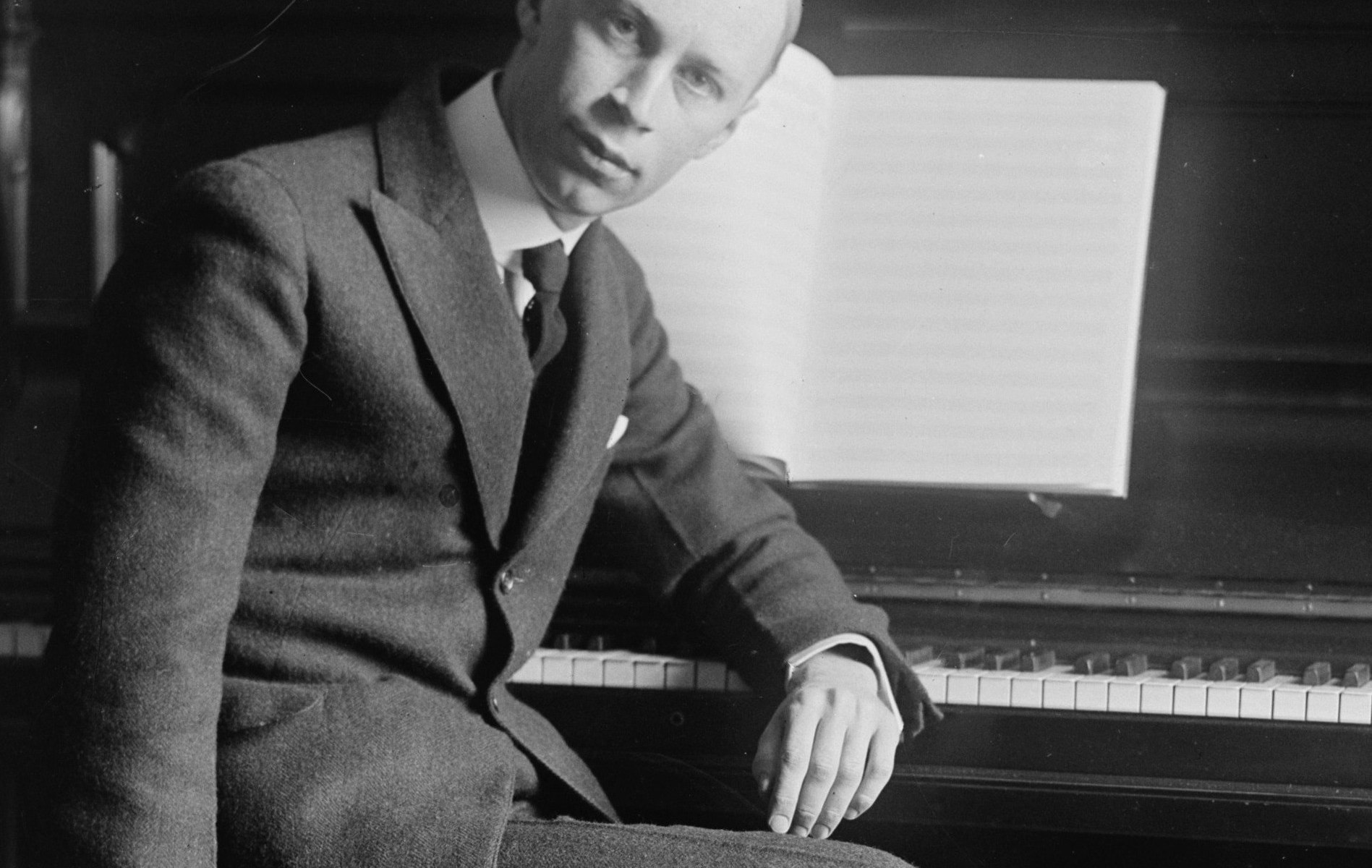
Sergej Prokofiev – Piano Sonata No. 7, 3rd Movement
This particular piece by Prokofiev was suggested by Jarle as a potential cover for Panzerpappa in 2004. At the time, he was working on his master’s degree in arranging and composition at the University of Oslo and was introduced to the Prokofiev sonata in a line of lectures devoted to music with “free tonality”, particularly that of Ravel, Shostakovich, and the said Prokofiev. His first reaction when hearing it was “Wow, this is incredibly groovy! I can hear drums and bass on this piece!”, and: “It’s in 7/8! Perfect!” :-).
An excerpt from the original solo piano version:
S. Prokofiev – Piano Sonata No. 7, 3rd movement (original version)
So he arranged the piece for Panzerpappa, which was still a quartet at this time, and challenged the band to try and play it! It took a while to get the whole thing together (it’s Prokofiev’s Totentanz, after all…), but the band loved it, and we played it live on two different occasions. And the audience actually loved it too…
An excerpt fram Panzerpappa’s rendition (live at Parkbiografen, Skien in 2004 – supporting Anekdoten):
S. Prokofiev – Piano Sonata No. 7, 3rd movement (Panzerpappa’s version)
It was perhaps kind of strange that the audience loved the sonata because this wasn’t quite the same as playing a Coldplay song, or something by Michael Jackson, or “Proud Mary” or whatever… Not even similar to covering a song by Yes, Genesis, King Crimson (more on that later), or any other band in the “progressive” fold… It was more like: “Wow, they’re playing Prokofiev with the instruments of a rock band… that’s far out!…”.
That reaction is probably quite similar to the reaction of the audience at Newcastle City Hall on 26 March 1971, when Emerson, Lake & Palmer played the version of Mussorgsky’s Pictures at an Exhibition that would end up on the album of the same name a bit over a year later.
So while we were fully aware that there was nothing particularly groundbreaking about performing music of the classical music canon in a rock band context, it was still a great way to acknowledge the great bands of the past, and (with an affectionate twinkle in the eye) “reconnect” with the Seventies’ grandeur, megalomania and refreshing lack of respect for musical boundaries. And it seemed appropriate that we, who’ve always considered ourselves belonging more in a “chamber-rock” vein, chose a short and humble movement from a piano sonata rather than attempting to barge out a full-blown symphony!
But wait… short and humble… In FACT I remember this Prokofiev-movement as being heinously difficult to play and we were FOUR people! Hats of to the Richters, Pollinis and Goulds who would easily (and macabrely) DANCE through the piece with supreme elegance and virtuosity on their many great recordings! Besides, it also involved quite a few very swift and challenging instrument changes, especially for Steinar. So now, in our current quintet formation, it’s very tempting to give “the Prokofiev” another shot – 16 years after we last played it…
We decided to revisit Steinar’s tune “Hulemysteriet”, from the 2001-album of the same name. This composition has been a regular feature in Panzerpappa’s live sets for almost 20 years. We had a great time recording and filming an updated version from lockdown, so we thought we’d share it with you. Enjoy!
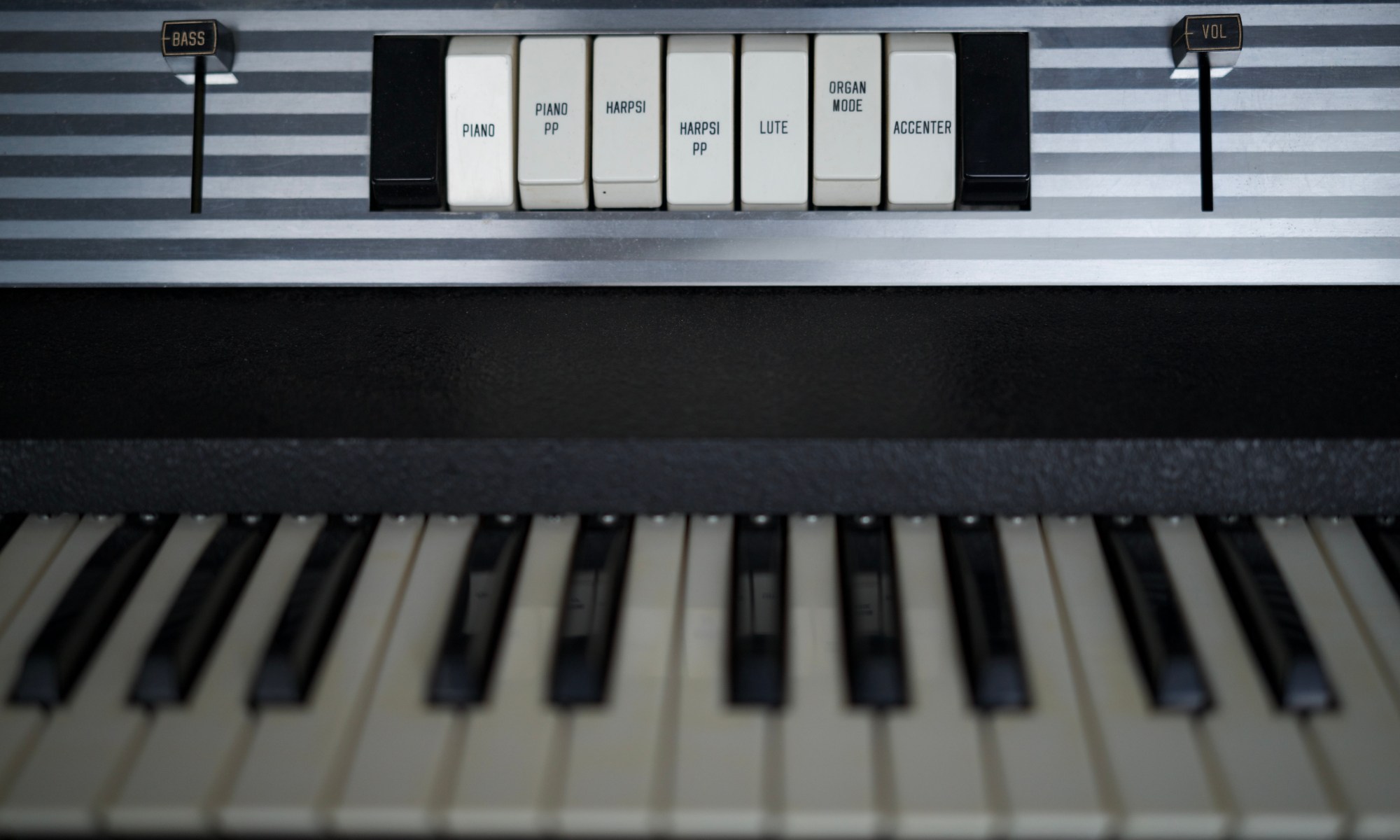
Saxophone & EWI – Steinar Børve Keys (Fender Rhodes 73, Farfisa Mini Compact Organ ’64) – Torgeir Wergeland Sørbye Guitar – Jarle G. Storløkken Bass & synth – Anders K. Krabberød Drums & percussion – Trond Gjellum
Mix & master – Trond Gjellum Video editing – Jarle G. Storløkken
ABOUT HULEMYSTERIET
Already from the beginning on, exploring odd metres and uncommon rhythms was important to Panzerpappa. Hulemysteriet (which means “Cave mystery”) was one of several songs which came about as a result of such explorations.
This particular song was conceived by Steinar after noticing a commonplace feature in child singing. Especially younger children can often run out of breath in the middle of a phrase while singing. This forces them to make a very short pause to draw breath before continuing the song. As a result of these short pauses of breath, the rhythm of the song will be slightly altered.
Normally, these pauses would appear at slightly irregular intervals and wouldn’t constitute a recurring rhythm. But Steinar’s idea was that, if you looped one such breathing pause event, this could become an interesting metre as a basis for a song. In the case of Hulemysteriet, this resulted in a 19/16 metre with a quite infantile melodic pattern to accompany it. Of course, the second half of the song is far from your ordinary children’s rhyme.
Yes, we love gear! (who doesn´t…?). In fact, we love it so much that sometimes we can’t resist taking arty photos of our gear. We’ve set up a gallery with some snaps of our favourite pieces of gear – loads more to follow! Check it out here!
Coming this Friday! Panzerpappa has just recorded and filmed a brand new version of “Hulemysteriet”, from lockdown. We can’t wait to share it with you. Will be released upon the world on April 23rd! Stay tuned, and be ready! 🙂
In 1947, French writer Raymond Queneau published a book called Exercises De Style. Queneau was part of a literary group called Ouvroir de littérature potentielle; roughly translated: “workshop of potential literature”, stylized OuLiPo.
Other notable members of Oulipo include Georges Perec, Harry Mathews and Italo Calvino.
The Oulipians used constraints,structures and patterns as a means of triggering ideas and inspiration. Such constraints could be
Lipograms (avoiding certain letters)
Palindromes
S+7 (Replace every noun in a text with the seventh noun after it in a dictionary)
Mathews’ Algorithm (elements in a text are moved around by a set of predetermined rules).
Exercises De Style tells a rather mundane, unremarkable story about a bus ride and a random encounter in Paris. This story is told 99 times (!), each of the variations in a different style, grammatical tense and with varying types of constraints.
In 2003, Panzerpappa started toying with an idea of making a musical equivalent of Exercises De Style. During one (of many!) beer-soaked, post-rehearsal hangouts at the legendary Mingles Bar & Restaurant in Trondheimsveien 4 (Oslo), the band conceived a rather ambitiuos plan:
Write a single musical theme, and then make 99 variations on this initial idea, all in different musical styles and for wildly differing musical line-ups.
Then, record all 99 pieces, with a total of 60 external musicians and singers participating (including a big band and a small orchestra!).
And finally, release this grand, conceptual masterpiece as a 3-CD set – with 33 variations on each disc – as STILØVINGAR (the Norwegian translation of “Exercises De Style”).
So, then, the members of the band, still young and idealistic, went to work and started writing. First, the initial theme, and then a solid dozen variations. The world was our oyster (soup…), and we were going to conquer it.
But, eventually, the sheer magnitude and scope of the project made it somewhat self-implode, and we ended up shelving the whole thing for an indefinite period of time. It was just SO much easier to release “regular” albums spanning 40++ minutes.
Before STILØVINGAR was altogether abandoned, Jarle was able to secure a live recording of variation no. 92, “Modern Style”, performed by the Ett Fett Big Band. And in 2016, Panzerpappa recorded no. 8, “Spådom” (Prophecy) as the opening track of the album Pestrottedans.
Now, in 2021, this particular composition have turned out to be just that: prophetic… Because now, in the age of streaming, the decline of “the album” and the rise of “the song” as the ultimate musical entity, and due to the fact that the members of Panzerpappa have gotten older and maybe a TAD bit wiser, we now intend to finish what we started!







 Panzerpappa