It was neither light nor dark, but the dim flicker before extinction.
For Negatives, Anders returns to his metal roots, drawing on the raw energy of a scene that shaped his youth in the early ’90s.
This track pays homage—not just to Queneau’s structural elegance—but to the cold, uncompromising expression found at the heart of Norwegian Black Metal. The piece builds a sonic monument out of what is not. Every phrase, every distortion, is sculpted from absence, contradiction, and grim resolve.
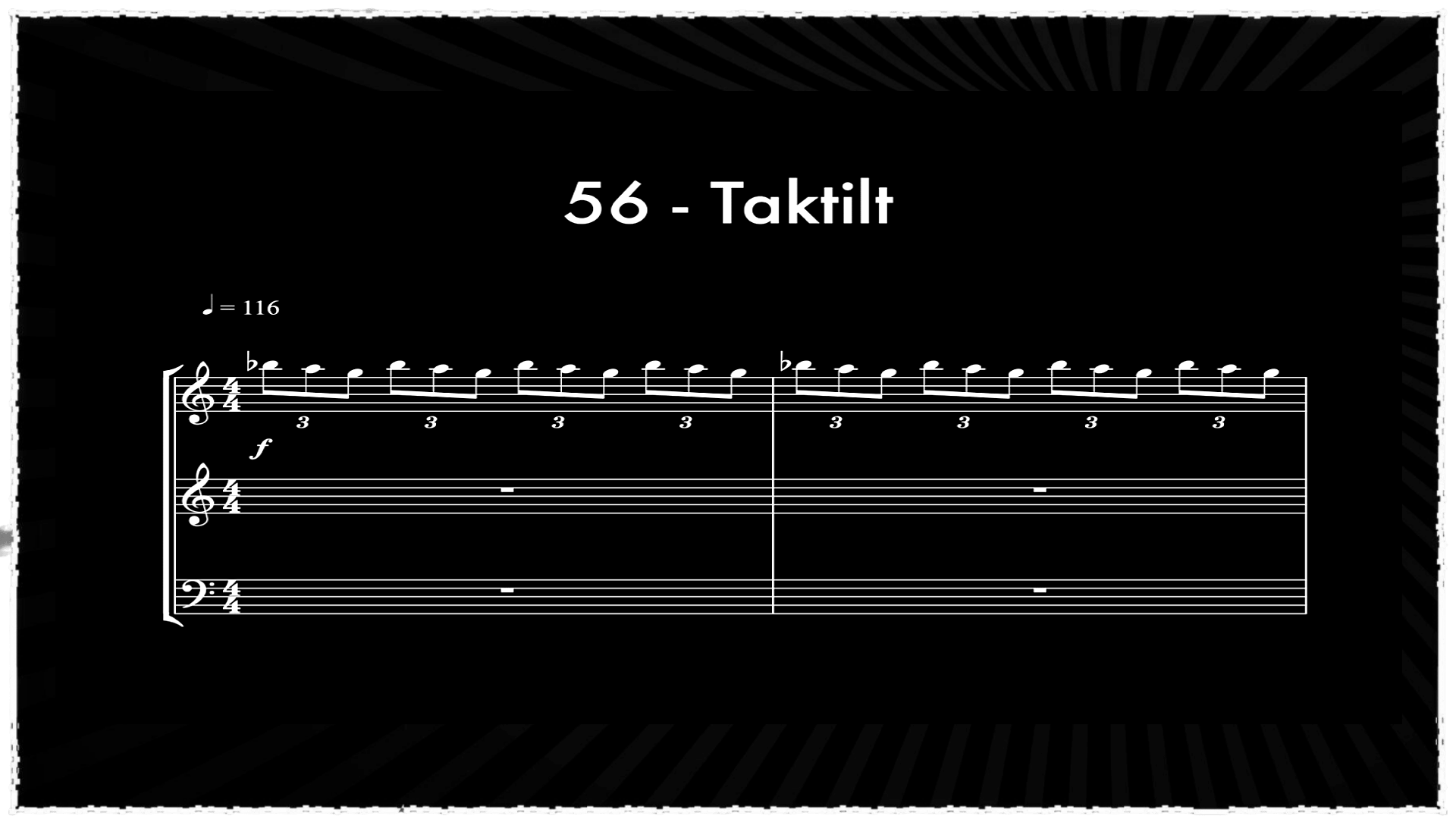
Here’s an Exercise to ring in the New Year: #56 Tactile. Inspired by the form of a Toccata, the name comes from the Italian word toccare (“to touch”). The Toccata originated in Renaissance Italy and developed over time, reaching its height in the Baroque era with composers like Johann Sebastian Bach. Known for their free-flowing, improvisatory style, Toccatas emphasize the performer’s touch, featuring rapid runs, arpeggios, and intricate passages that showcase both the instrument’s possibilities and the player’s skill.
Queneau, a founding member of the Oulipo group, was fascinated by how stylistic elements and constraints could transform a narrative. The Exercise “Tactile” explores touch in intricate detail, turning ordinary sensations into layered, unexpected descriptions. Similarly, the Toccata transforms physical contact with the instrument into a dynamic musical narrative, where touch becomes the central creative force. Both invite us to reconsider something as simple as contact—whether through sound or words—as a source of creativity.
The music, written and performed by Steinar, was realized using a sample library created by Soniccouture, based on the historic organ at All Saints Church, Tooting. This organ, built in 1906 by Harrison & Harrison and voiced by Arthur Harrison, is renowned for its delicate, quiet registers and powerful bass notes. Over 100 years old and tonally unaltered since its installation, it provides an authentic, timeless sound with a modern digital twist—capturing the tactile essence of both the Toccata and Queneau’s exploration of touch.
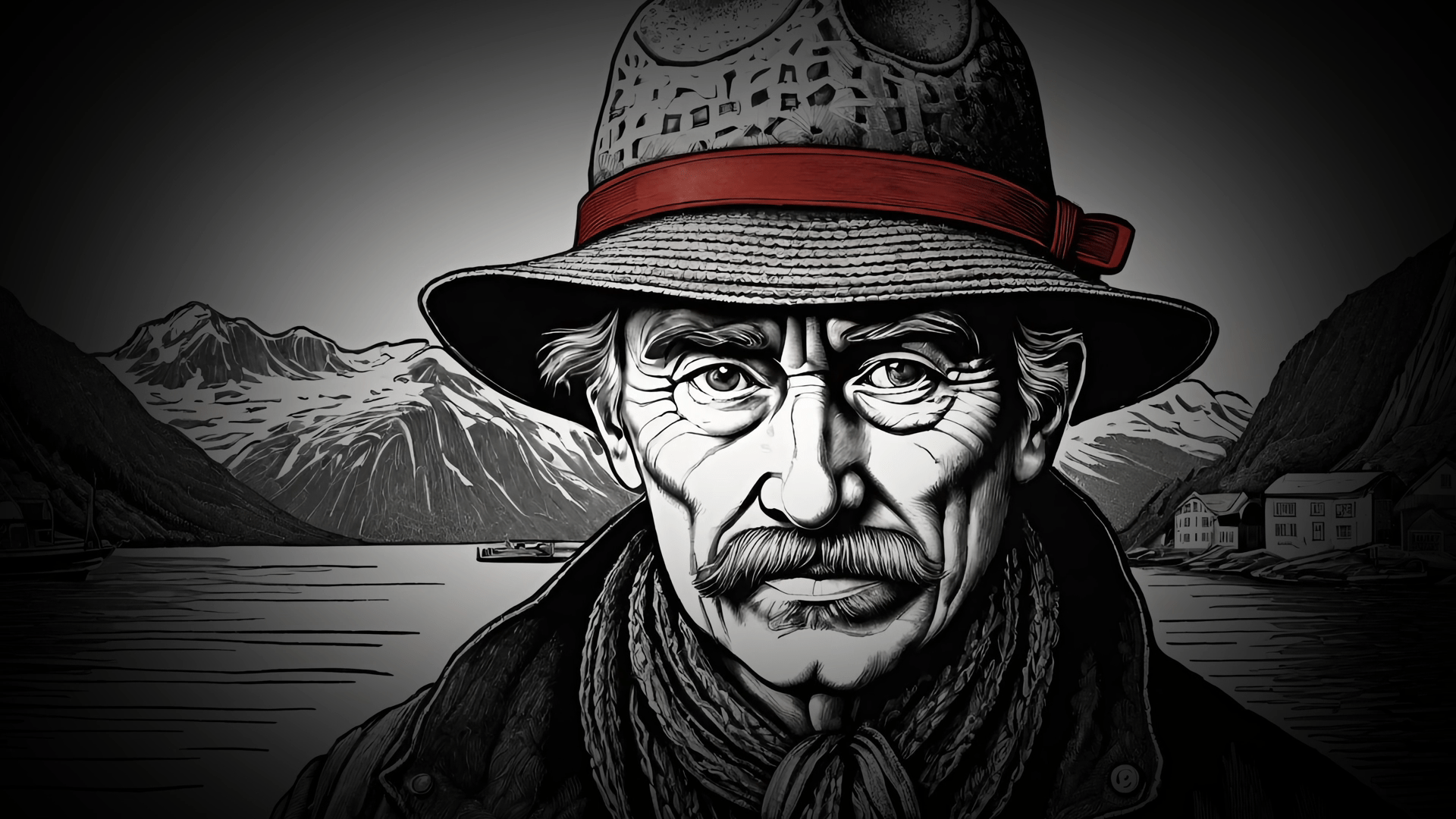
This exercise is entitled “Eg for min del” in Norwegian, which directly translated into English means “For my part”. Steinar, which took upon him to interpret this musically, associated this phrase first and foremost with how we humans might use strong personal beliefs, be it of religious, moral or political kind, to judge the actions of others. These beliefs will often be the result of the cultural and social setting that we grew up in. On the positive side, such strong beliefs can clearly also form the foundation for achieving great things.
Musically, Steinar turned to traditional, Norwegian music for inspiration. More specifically, he had religious folk songs in mind. A good example of such songs is the traditional melody from the Hallingdalen-region which in Norway is used for the originally German psalm «Eg veit i himmelrik ei borg» («Ich weiss ein ewiges Himmelreich» in German). For the exercise, a single voice represented by the soprano saxophone, delivers the melody.The mood is stern and slightly ominous. Church organ is used to emphasize the religious context.
The intro and outro of the piece is inspired by the cry of the shepherd or shepherdess calling for his/her flock. This part also serves as a humble tribute to the great and unique Norwegian saxophonist Jan Garbarek. He was a huge inspiration to Steinar when learning to play, as for so many aspiring saxophonists of his generation.
All instruments of this exercise are performed by Steinar.
Early on we decided that at least one of the Excercises would be dedicated to the musical world of Tom Waits (it will actually be two – stay tuned).
We meticulously searched Queneau’s book, trying to find a text that would capture the melancholic atmosphere, vivid imagery, and gritty realism often found in Tom Waits’ lyrics.
Finally, we hit gold with Exercise no. 80 Antiphrasis, which is perhaps the most Waits-like of all Queneau’s variations (Antiphrasis can also refer to the record label Anti which has been the home for Waits’ music for the past 25 years).
The text has a raw, sometimes surreal quality, painting portraits of eccentric characters and forgotten corners of society:
“Midnight. It’s raining. The buses go by nearly empty. On the bonnet of an AI near the Bastille, an old man whose head is sunk in his shoulders and who isn’t wearing a hat thanks a lady sitting a long way away from him because she is stroking his hands. Then he goes to stand on the knees of a man who is still sitting down.
Two hours earlier, behind the Gare de Lyon, this old man was stopping up his ears so as not to hear a tramp who was refusing to say that he should slightly lower the bottom button of his underpants.”
Jarle first wrote the melody and chords (at his home piano in a slightly intoxicated state at 1 a.m.), which is basically the main theme of the Exercises in a setting reminiscent of darker Waits ballads such as “Alice.”
The original text lacked a typical song structure, so some effort was needed to convert the lyrics into verse form. Anders wrote a script to parse and extract the lyrics from all Tom Waits’ songs and albums from a website. The words were sorted by frequency, and after removing common and non-descriptive words (e.g., “the,” “and,” “it” etc.), they were fed into an AI along with Queneau’s text.
The product was verses that were structured based on the characters and the mood of the Original text but using words that often occur in Tom Waits lyrics. We interspersed a spoken word rendition of Quenau’s original for the intro and interlude, and voila—we had a song.
Verse 1
Midnight in Paris, rain starts to fall,
deserted streets, empty buses crawl.
A feeble old man, his head bowed low,
No hat to shield him from life’s cruel blow.
From a distance, a lady draws near,
Caresses his hands with tender care.
He rises, on a kneeling man’s knee
Seeking solace, a moment to be free.
Verse 2
Two hours prior, by Gare de Lyon’s train,
An old man fought the tramp’s refrain
The fellow implored, “Lower thy briefs, sir!
Find freedom there, no need to deter.”
But the old man turned, refused the plea
Keeping secrets locked, for no one to see.
At midnight, where dreams find their sway.
Love lingers, as night turns to day.
Outro
In Mr. Waits’ realm, where stories collide
Midnight’s whispers, secrets reside.
Rain-soaked alleys, where the weary roam
In lyrics of longing, they find their home.
To really nail the feel for this one, we decided to call in some outside help. And what a band it turned out to be:
Jakob Berg (from nationally acclaimed Tom Waits project Blow) – vocals
«Apheresis» is a rhetorical and phonological term for the omission of one or more sounds or syllables from the beginning of a word.
For this particular exercise, Trond decided to run the mix of Exercise 01: Notat through a Chase Bliss Mood pedal. This is a unique and versatile effects device designed to spark creativity through real-time looping, delay, and modulation.
The Mood pedal features a dual-channel micro-looper and delay, ideal for generating ambient soundscapes, glitchy textures, and evolving loops.
The pedal basically chops incoming audio into fragments, which are then looped, enabling time-stretching, pitch-shifting, and stutter effects. With real-time control over loop speed, delay, and reverse playback, one can manipulate time, alter the loops, reverse direction, or add lo-fi degradation to the signal.
This Exercise requires some personal backstory, as recalled by Jarle:
«A little over ten years ago, in January 2014, there was quite a bit of frighteningly real drama in the Panzerpappa camp.
After a great year in 2013, highlighted by our performance at the prestigious RIO Festival in Carmaux, France, we met at a weekly rehearsal to discuss future plans and play some tunes. Suddenly, our beloved drummer Trond became pale, and his energy dropped. Concerned about his condition, we decided to end the rehearsal early, a rare occurrence for us. We were worried, of course, but not prepared for what followed.
On his way home, Trond called Tone, his wife at the time, who insisted that he go to the ER immediately. From that point, things moved quickly. According to the doctors, Trond had been dangerously close to a heart attack and was not allowed to go home. Instead, he was rushed through the healthcare system, and two days later, he was in Ullevaal Hospital, prepped for heart surgery.
It was a standard procedure with high chances of success and full recovery, but I remember living in a constant haze immediately after the surgery, sick with worry about Trond and (yes, I admit it) the future of the band. We were eagerly awaiting Trond’s recovery so he could accept visitors. We were allowed to see him a little later, on a bone-chillingly cold day in early February 2014.
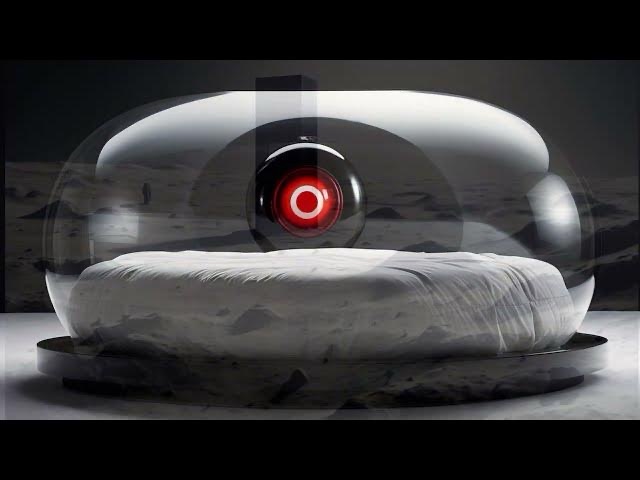
We entered the room and found him in a hospital gown, wrapped in sheets, with his head on a pillow and connected to various medical machines; despite looking every bit as pale as he had on that seminal rehearsal two weeks before, he still wore his characteristic smile. We instinctively knew that everything would be ok – Trond would live, fully recover, and this band and fellowship, so massively important to all of us, would continue to exist.
Naturally, Trond had to take a break from drumming for several months. We decided to book a band trip later in the autumn when he was fully recovered to attend the Lindsay Cooper tribute concert at the Barbican in London. Retrospectively referred to as Trond’s “Back To Life”-tour, the London excursion proved to be one of those key moments in life for all of us.
After a day of exploring London’s pub life, we headed to the Barbican on Saturday afternoon. Personally, I can’t remember being so pumped up over a concert EVER in my life. Henry Cow is my “desert island” band. If I were ever stranded in some remote corner of the Pacific Ocean, I would probably manage quite well if I could bring the entire Henry Cow discography with me.
Not to dwell on too much detail, the concert was THE most incredible live music experience of my life up to that point. We got it all: Henry Cow classics, Oh Moscow, excerpts from Rags, Gold Diggers, and other film music, and quite a few songs from News From Babel, which were among the concert’s highlights. And they were all there: Cutler, Frith, Hodgkinson, Greaves, Krause, Minton, Potter, Parkins, Berckmans… Only Wyatt was missing, as expected, but we could not help but hope a little…
After the finale of Oh Moscow, the band took its bow and left the stage. It was one of those rare moments where life is just perfect. After a trip to a local bar, we headed back to the hotel, bought crates of beers from the nearest corner store, and Trond was allowed to play Close To The Edge on a small Bluetooth speaker as many times as he wanted :-)»
Exercise #72 – Epenthesis commemorates this experience. Jarle wrote it in a style similar to News From Babel, even including (in a subtle way) references to a couple of their classic songs towards the end of the piece. The main theme of the exercises is used, and similar to the phonological phenomenon of “epenthesis,” a note has been added between every pair of notes in the original theme, resulting in a very different character. However, the original melodic pattern remains intact.
The harp was essential to invoke the sound of News From Babel, and we were fortunate to have Birgitte Volan Håvik, the incredible harpist from the Oslo Philharmonic Orchestra, record the harp part. Panzerpappa appreciate her dedication and outstanding performance! We also want to give an honorable mention to Steinar, who did an impressive job covering a variety of woodwinds (oboe, bassoon, and saxes). Last but not least, the incomparable Wenche Losnegård contributed beautiful vocals. We are forever grateful!
The lyrics, Marxist Cutler-style, are written by Jarle, in the spirit of Raymond Queneau. Enjoy!
In this exercise, Trond wanted to explore a style reminiscent of what the German electronic pioneer Klaus Schulze was doing during his heyday in the late seventies and early eighties: sequencer-based music with picturesque moods over a rhythmic foundation that, despite seeming stationary, is constantly changing on a micro-level.
Trond used sounds closely aligned with what Schulze might have used, and structurally, he has stretched out themes and moods a bit longer than usual.
What would you get if you pair playful and melodic avant-rock with lyrical folk music? Panzerpappa, a Norwegian instrumental prog rock band, wanted to find out.
In May 2023, they teamed up with Rannveig Djønne, one of Norway’s leading artists on the diatonic accordion, to create an evening of rare musical encounters at the heart of Norwegian fjord country.
With the guest appearance of Silje Hveem Lofthus, a classically trained flutist, and Ola Mile Bruland and Veronika Hørven Jensen, two members of Panzerpappa side-project Mythopoeic Mind, the resulting concert met its purpose; becoming a musical intersection where ideals from different musical genres could find resonance (hence the name of the project, Skjeringspunkt, which in Norwegian means ‘intersection’).
Despite minimal rehearsal time together, the musicians managed to find common ground across musical barriers to create something new and unique. The concert was documented, with both multi-track audio and multi-camera video recordings, and will be available in digital formats from Panzerpappa’s Bandcamp site.
The audio recording will also be available on CD in a limited number of copies and can be ordered from the same site. The album, with release date set to March 1st, 2024 is dedicated to the memory of Lars Hollmer. The album will only be available as a physical CD and/or download from Bandcamp: panzerpappa.bandcamp.com
On the 5th of February 1978, Robert Fripp made the first solo performance of what would later be known as Frippertronics at the Kitchen (hence the exercise name Gastronomical), one of New York’s leading avant-garde art scenes.
He used a technique developed by Terry Riley and Pauline Oliveros in the ‘60 where two reel-to-reel tape recorders were set up so that the sound was recorded on the first tape machine and then played back a short time later by the second machine, the length of the tape connecting the two machines determines the length of the delay. He then played along with the delayed sound, layering new parts over the loops in real-time creating a complex, evolving soundscape.
This exercise was released on the 5th of February 2024, 46 years later, as a tribute to his significant contribution to the world of music.









 Panzerpappa